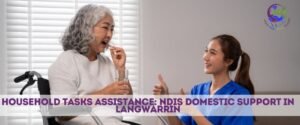


Personal‑care support helps people with disability manage everyday tasks such as dressing, bathing, feeding and medication. In Victoria, NDIS participants can access these services to maintain independence and improve quality of life. This guide explains what personal‑care support is, who can get it, how it is funded, and how to start receiving help.
What is Personal‑Care Support?
Personal‑care support is assistance with routine activities that are essential for personal well‑being. It includes:
- Assistance with dressing and grooming
- Help with toileting and incontinence management
- Support for feeding and medication reminders
- Assistance with mobility and transfers
- Help with household tasks that affect personal health, such as laundry and meal prep
These services are delivered by trained carers who can work in the participant’s home or in community settings. The goal is to enable people to live as independently as possible while ensuring safety and dignity.
Who Can Benefit?
Any NDIS participant who has a disability that limits their ability to perform daily personal‑care tasks can request this support. The NDIS will assess the need based on:
- Functional capacity and limitations
- Risk of injury or health complications
- Desired level of independence
- Impact on other goals in the participant’s plan
Personal‑care support is often combined with other supports such as community participation or therapeutic services.
Eligibility & Access Rules
Eligibility Criteria
To be eligible for personal‑care support under the NDIS:
- You must be a registered NDIS participant with an approved plan.
- There must be a demonstrated need for assistance with daily personal‑care tasks.
- The support must be reasonable, necessary and contribute to achieving the participant’s goals.
- It must be part of a broader strategy that includes other supports, such as therapy or community activities.
Access Steps
- Review Your Plan – Check the current plan for a personal‑care support item or an activity‑based funding block that can cover it.
- Discuss with Your Planner – If your plan does not include personal‑care support, speak to your NDIS planner or support coordinator about adding it.
- Choose a Service Provider – Select a provider that offers personal‑care services in Victoria. You can use local directories or ask for recommendations from your support coordinator.
- Request Funding – Submit a request through the NDIS portal or your planner. Provide details on the type of support, frequency, and expected outcomes.
- Activate the Support – Once approved, the provider will start delivering services as scheduled. Keep records of hours and activities for future reviews.
What’s Included & What’s Not Included
Included in Personal‑Care Support
- Assistance with dressing, grooming, toileting and feeding
- Mobility support and transfers between bed, chair and toilet
- Medication reminders and basic medication management (no prescription administration)
- Support with household tasks that directly affect personal health, such as laundry, dishwashing and meal preparation
- Supervision for safety during personal‑care activities
Excluded from Personal‑Care Support
- Medical or nursing care that requires a registered nurse or doctor (e.g., wound care, injections)
- Assistance with tasks that are primarily household maintenance, such as gardening or cleaning outside the immediate personal‑care area
- Any activity that exceeds the price limits set in the latest NDIS Pricing Arrangements and Price Limits
- Services that are purely recreational or social without a direct personal‑care element
Funding & Planning Considerations
Funding Mechanisms
Personal‑care support can be funded through:
- Core Supports – The participant can request an activity‑based funding block that covers personal‑care activities.
- Capacity Building Supports – If the support is part of a strategy to build skills or independence, it may be funded as a capacity‑building item.
The NDIS will provide funding up to the price limits specified in the latest Pricing Arrangements. The amount will be based on the number of hours and the type of service required.
Planning Tips
- Document the specific personal‑care tasks you need help with and the frequency.
- Include any safety concerns, such as fall risk or medical conditions that require supervision.
- Set clear goals, such as reducing the number of assistance hours or improving self‑care skills.
- Review your plan annually or whenever your circumstances change to adjust funding as needed.
How to Request/Activate the Support
Activating personal‑care support involves a few simple steps:
- Identify a Provider – Use local resources such as NDIS home‑care supports in Wyndham or NDIS home‑care supports in Wyndham for providers that operate across Victoria.
- Submit a Request – Provide the provider with details of the support needed, including hours, tasks and any special requirements.
- Approve Funding – Your NDIS planner will review the request. If approved, the funding will be allocated to the provider.
- Start the Service – The provider will begin delivering personal‑care support on the agreed schedule.
- Monitor & Report – Keep a log of hours and activities. Report any changes or issues to your planner for review.
Local Context: Victoria, Belgravia, Chelsea and Pimlico
In Victoria, many participants live in suburbs such as Belgravia, Chelsea and Pimlico. These areas offer a mix of residential homes, apartments and community facilities that support daily living. Personal‑care services in these suburbs are often provided by local agencies that understand the community’s unique needs.
For instance, residents in Belgravia can access services that cater to the older population, while Chelsea offers a vibrant community for younger families with disabilities. Pimlico, known for its quiet streets and local parks, is ideal for participants who benefit from outdoor activities that complement personal‑care routines.
Choosing a provider familiar with these suburbs ensures that support is delivered in a culturally appropriate and convenient setting.
5 FAQs About Personal‑Care Support
1. What tasks are covered under personal‑care support?
Personal‑care support covers activities such as dressing, grooming, toileting, feeding, medication reminders, mobility assistance and household tasks that directly affect personal health.
2. How do I know if I need personal‑care support?
Consult your NDIS planner. They will assess your functional limitations and determine if personal‑care support is necessary to achieve your goals.
3. Can personal‑care support be combined with other services?
Yes. Personal‑care support can be part of a broader plan that includes therapeutic services, community participation and capacity‑building supports.
4. Are medical treatments included in personal‑care support?
No. Medical or nursing care, such as wound treatment or medication administration, is not covered under personal‑care support and requires a qualified medical professional.
5. How often can I request changes to my personal‑care support?
You can review and adjust your support at any time, especially during annual plan reviews or if your circumstances change.
For more detailed information about personal‑care support options in Victoria, you may refer to NDIS home care in Wyndham, which provides examples of providers and service models across the state.
Remember that each participant’s needs are unique. Working closely with your planner or support coordinator ensures that the support you receive is tailored to your goals and circumstances.
We hope this guide has clarified how personal‑care support can help you or your loved one lead a more independent and comfortable life in Victoria.
Disclaimer: This article is general information only. Check your plan and speak with your planner or support coordinator.